“The forces that unite us are intrinsic and greater than the superimposed influences that keep us apart.” — Kwame Nkrumah
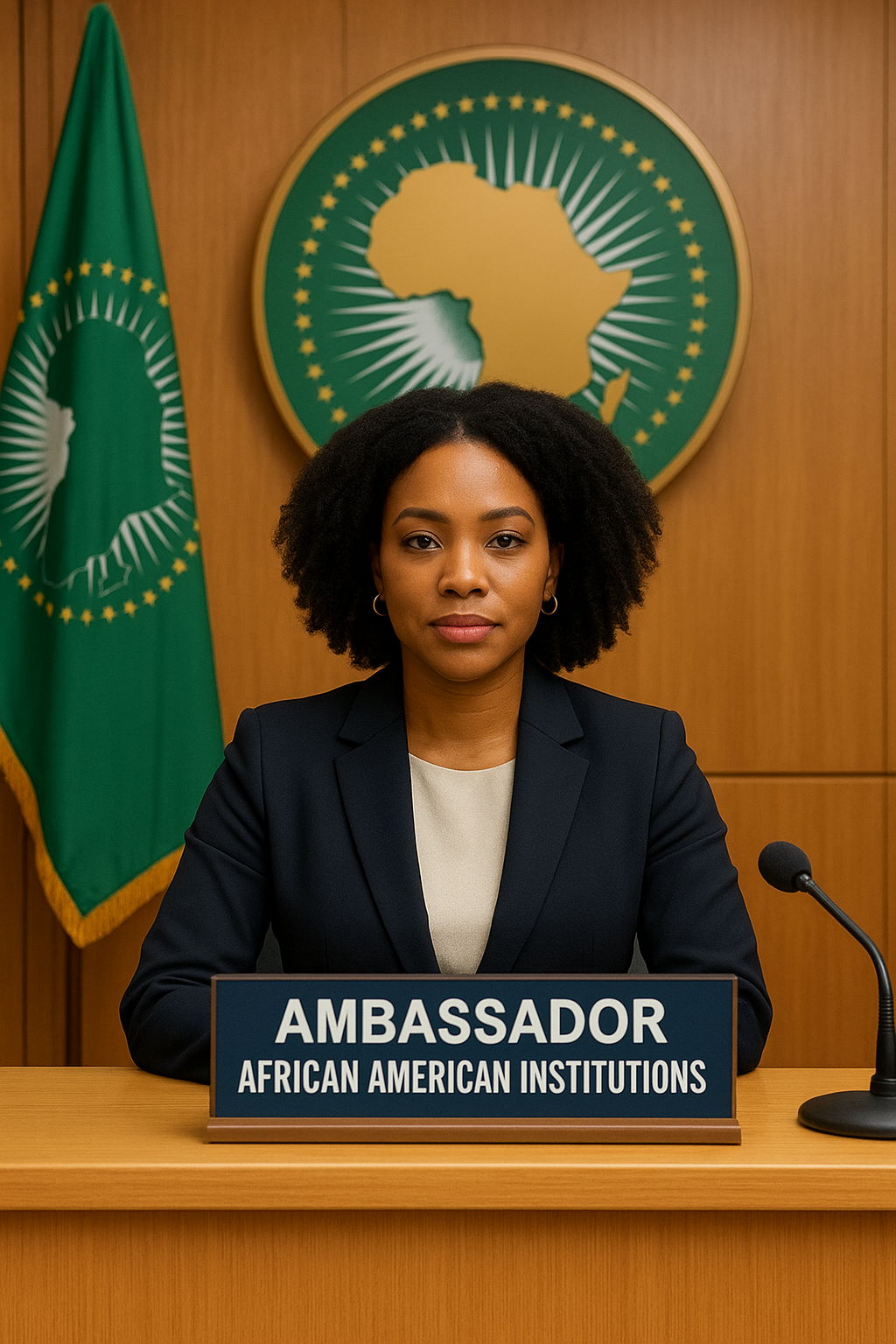
There is an old African proverb that says, “If you want to go fast, go alone. If you want to go far, go together.” African America has often been forced to move fast in the United States, reacting to crises of survival. Yet moving fast has come at the expense of building deeper institutional connections across the Diaspora that could allow us to go farther. The time has arrived for Historically Black Colleges and Universities and other African American institutions to establish direct diplomatic relations with nations of major African descent in the Caribbean and on the African continent. Without this, we remain trapped in the narrow domestic politics of America while the rest of the world realigns into new centers of power.
African America has long been boxed into seeing itself only through the lens of the United States. Civil rights struggles, voting rights battles, and economic justice campaigns have focused our attention on Washington and state capitals. This has won some victories but has also stunted institutional imagination. Other diasporic communities understood long ago that their influence had to extend beyond the borders of the nations they lived in. The Jewish community built global power not only by lobbying Congress but by sustaining ties with Israel and institutions across Europe. The Irish in America leveraged Ireland as a cultural and diplomatic anchor that gave them a sense of sovereignty and international weight. Diasporas become powerful when they fuse homeland and hostland into a single field of action. African America, by contrast, has been forced to operate as if stateless, appealing endlessly to American benevolence rather than cultivating parallel sovereignty of its own.
HBCUs can change this. They are not only the intellectual and cultural heart of African America, but they are also the most logical institutions to function as diplomatic and economic bridges. HBCUs produce the professionals who sustain the fragile ecosystem of African American life—doctors, lawyers, engineers, scientists, teachers—but they also sit at the crossroads of global intellectual exchange. Their graduates have networks that span ministries, corporations, NGOs, and research centers across the world. What is lacking is the institutional will to formalize these connections into channels of power. Imagine Howard University establishing a permanent office in Lagos, Tuskegee University partnering with Jamaica on agricultural innovation, or Florida A&M University creating an exchange program with Guyana focused on natural resources. These are not simply academic exercises. They are blueprints for diplomacy, the foundation of institutional sovereignty that extends power beyond the American context.
The Caribbean should be the first frontier of this effort. African Americans share history, culture, and bloodlines with the Caribbean. Nations like Jamaica, Trinidad & Tobago, Haiti, Barbados, and the Bahamas are majority African descent, wrestling with the same issues of undercapitalization, debt, climate vulnerability, and dependence on narrow industries like tourism. Yet unlike African America, these nations hold sovereignty. They have seats in the United Nations, they cast votes in multilateral institutions, and they can influence global negotiations on trade, climate, and finance. By establishing enduring partnerships with Caribbean governments—whether through ministries of education, agriculture, or finance—African American institutions can extend their influence onto the world stage. Through these connections, African America ceases to be an isolated minority and begins to operate as part of a larger bloc of African-descended power.
Africa, however, is the long horizon. By 2050 the continent will be home to nearly a quarter of the world’s population. Its cities will be among the largest in the world, its economies among the fastest growing, and its resources among the most contested. China, India, Russia, and Europe are already pouring billions into Africa, securing access and influence. Meanwhile African America, despite being the Diaspora most directly descended from the continent, remains absent from these negotiations. HBCUs can be the bridge that fills this gap. Africa is desperate for trained professionals who can design, build, and govern. African America has those professionals but often finds their talents trapped within the bottleneck of America’s racial hierarchy. A structured program of exchanges, professional pipelines, and joint ventures between HBCUs and African universities or governments could provide opportunities for both sides. It would also reposition African America as part of a billion-person continental force rather than a vulnerable minority within a single nation.
To do this, African American institutions must construct an architecture of diplomacy. This could mean establishing HBCU diplomatic missions in African and Caribbean capitals, creating Diaspora summits that gather HBCU leaders with Caribbean ministers and African policymakers, building joint research centers that tackle common struggles such as climate change or renewable energy, and drafting legal frameworks that give HBCUs quasi-diplomatic recognition in education and technology. It could also mean forming trade corridors where African American businesses partner with Caribbean and African enterprises in sectors like agriculture, fintech, and tourism. This is not charity—it is a strategy of power, of embedding African America into global structures rather than leaving it at the mercy of domestic politics.
The greatest obstacle to this vision is not logistical but psychological. Too many African Americans have been conditioned to think of themselves solely as domestic petitioners, trapped in the role of begging for inclusion rather than building international leverage. HBCUs themselves were founded in defiance of that kind of thinking. They were created when America claimed Black people had no right to literacy or learning, and they stood as sovereign spaces of intellect and imagination. That same defiant spirit must now be projected globally. The Caribbean and Africa are not foreign lands to us; they are family. The enslaved were dragged from Africa, many through Caribbean ports, before being dispersed into the United States. Our bloodlines run through Accra, Kingston, Port-au-Prince, Lagos, and Monrovia just as they run through Birmingham, Chicago, and Houston. Diplomatic relations are not about discovery—they are about reunion.
The stakes are immense. America is no longer the uncontested center of global power. Multipolarity is here, the Global South is rising, and new blocs are being formed. If African America stays confined within U.S. borders, its fate will always be tied to the precarious politics of race in America. But if HBCUs and other African American institutions weave themselves into the economic and political fabric of the Caribbean and Africa, then we gain allies, we gain leverage, and we gain a platform from which to speak not just as America’s internal minority but as a Diaspora with global standing. When African America speaks, it could do so with the backing of Caribbean governments and African states. When HBCUs negotiate, they could do so not only as schools but as multinational institutions with transcontinental networks. That is the difference between powerlessness and power.
This path will not be easy. It requires HBCU presidents to think beyond the narrow boundaries of their campuses, alumni associations to reimagine themselves as diplomatic actors, and African American chambers of commerce to broaden their vision from local contracts to global corridors. It will require new institutions—diplomatic offices, summits, research centers—that have never before existed in our ecosystem. It will require resources, creativity, and courage. But the alternative is worse: permanent marginality inside America, endlessly appealing to a system designed to contain us. The Caribbean and Africa are waiting. They know our struggle. Many are eager to deepen ties. The question is whether African America, and particularly HBCUs, have the vision and courage to answer the call.
The choice is between remaining America’s permanent minority or becoming a global Diaspora power. Between isolation and alignment. Between pleading and partnership. HBCUs have always been engines of imagination and defiance. They can be that again, this time on the global stage. The moment has come for African American institutions to plant diplomatic flags not only in Washington, but in Kingston, Accra, Port of Spain, Lagos, and beyond. The Diaspora is vast. The future is global. The time is now.
Disclaimer: This article was assisted by ChatGPT.
 hbcupolitics