“If African America fights every battle, it wins none; but if it stands firmly with Haiti and Sudan, it proves it can turn solidarity into power.” – HBCU Politics
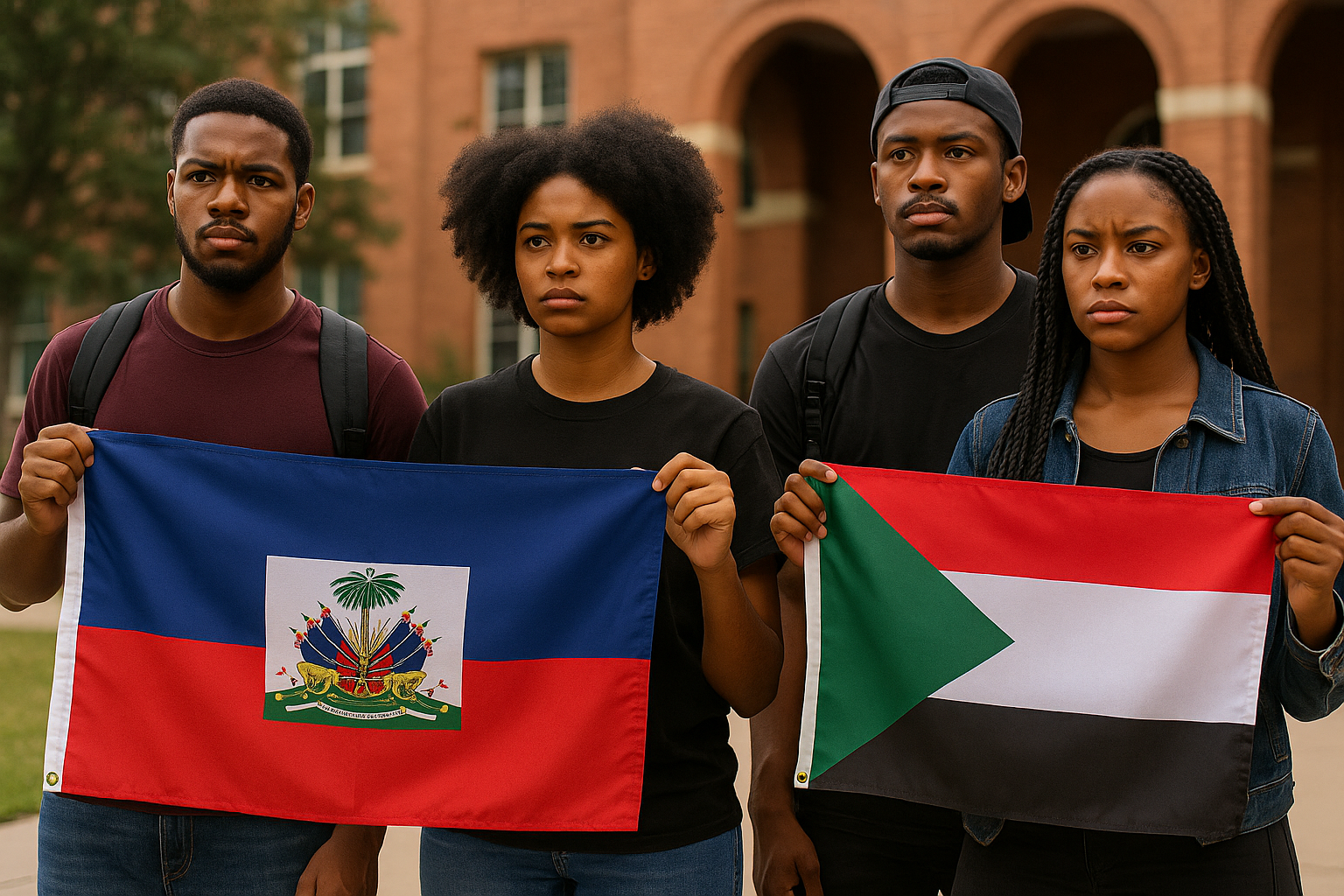
The placards read “Free Palestine”. The chants echoed through city streets, college campuses, and congressional hearings. African American activists, clergy, and students were again on the frontlines, amplifying the suffering of a people under siege thousands of miles away. Their moral voice is not misplaced, Palestinians endure harsh realities that deserve global scrutiny. Yet as African Americans pour their scarce institutional resources, media capital, and political attention into Gaza, two crises far closer to home in Haiti and Sudan sink further into the abyss with barely a whisper from the very community that once defined Pan-African solidarity. This is not about choosing one human tragedy over another. It is about recognizing the limits of African America’s institutional bandwidth and the danger of being pulled into every global injustice at the expense of those in which its voice and power could matter most. Haiti, the world’s first Black republic, and Sudan, a vast African nation where civil war has left nearly 19 million children without schooling, should be obvious anchors of African American foreign concern. Instead, they languish at the periphery of African America’s imagination sacrificed in part because Palestine has become the fashionable cause.
African America has long been drawn to universal struggles for justice. From the abolitionists who supported Irish independence in the 19th century to the Black Panthers who aligned with Vietnam’s anti-colonial forces, there is a powerful tradition of solidarity. The impulse is noble. It reflects both empathy and a recognition that racial injustice knows no borders. But that same tradition has often spread African American power too thin, diluting its ability to build enduring institutions or sustain interventions that materially alter conditions for Black people globally. In the 1960s and 1970s, African American activists tied themselves to anti-apartheid, anti-imperialist, and Cuban solidarity movements, even as domestic poverty and urban disinvestment grew worse. Today, Palestine fills that slot absorbing rallies, hashtags, and op-eds while Haiti collapses into gang rule and Sudan teeters toward famine. The question is not whether African Americans should sympathize with Palestinians. It is whether they can afford to elevate Palestine above Haiti and Sudan, given the finite resources of money, media access, and political leverage available to African America.
African America controls few global institutions. It does not command armies, multinational corporations, or global media conglomerates. Its reach into U.S. foreign policy is indirect, filtered through a political system in which its concerns are often marginalized. What African America does have are limited but potent instruments of soft power: HBCUs that train foreign elites, churches that fund humanitarian missions, nonprofits that run small aid programs, and a handful of elected officials who can elevate issues in Washington. Yet these resources are fragile and overstretched. Every protest organized around Palestine is an event not organized for Haiti. Every op-ed written for Gaza is one not pitched about Sudan’s decimated education system. Every dollar raised for Gazan relief is one not sent to Haitian hospitals where cholera and malnutrition claim lives daily. The opportunity cost is staggering. If African American institutions collectively prioritized Haiti and Sudan, they could help fill the void left by American neglect and international fatigue. Instead, they echo the broader American left, where Palestine dominates the discourse, relegating two majority-Black nations to invisibility.
Haiti ought to be inseparable from African American consciousness. Its 1804 revolution inspired enslaved Africans in the United States, offering a glimpse of freedom. Its struggles against French indemnities, American occupation, and dictatorship mirror the very themes of African America’s own fight. Yet in the 21st century, Haiti is a geopolitical orphan. The United States intervenes episodically, more concerned with migration than reconstruction. International NGOs raise money but leave little permanent infrastructure. And African America, despite cultural proximity, offers little beyond symbolic gestures. Imagine if African American mayors, churches, HBCUs, and banks had collaborated to create a sustained Haiti Fund twenty years ago. By now, it could have seeded hospitals, schools, and microfinance institutions, insulating Haiti from its current spiral of gang domination and state collapse. Instead, Haiti drifts, while African America diverts its scarce attention elsewhere.
Sudan is less visible but no less urgent. Since 2023, war between rival generals has displaced millions and decimated the economy. UNICEF estimates nearly 19 million children—roughly the population of Florida—are out of school. Malnutrition is widespread. Neighboring states like Chad and South Sudan are buckling under refugee flows. Where is African America? Sudanese crises rarely trend on Twitter. Few African American celebrities champion the cause. African American media outlets, already undercapitalized, devote scant coverage. Yet Sudan’s fate is not abstract: instability there undermines African Union capacity, encourages extremist recruitment, and erodes Africa’s leverage in global negotiations on trade, climate, and debt. By failing to raise Sudan’s plight, African America weakens its own credibility as a serious actor in global Black politics. A community that cannot marshal energy for Sudan, but can fill streets for Palestine, sends an unmistakable message: fashionable causes trump strategic ones.
The imbalance has real-world consequences. African American solidarity with Palestine, while heartfelt, achieves little tangible change. U.S. foreign policy toward Israel is entrenched, backed by military aid and strategic calculus that dwarfs protest pressure. By contrast, African America’s voice could sway policy toward Haiti and Sudan, where Washington is undecided, undercommitted, and often searching for guidance. Moreover, investing in Haiti and Sudan would yield reciprocal benefits. Stronger ties could empower HBCUs to recruit students, create joint research programs, and build diplomatic pipelines. African American banks and businesses could enter reconstruction markets. And culturally, reinforcing solidarity with majority-Black nations would reassert African America’s Pan-African credibility, which is increasingly questioned on the continent. Instead, African America risks becoming a community that protests loudly for others but cannot defend its own kin.
One reason for the imbalance is media. Palestine commands global coverage. Images of bombed-out buildings and weeping children circulate endlessly. Haiti and Sudan, by contrast, are covered sporadically and often framed as hopeless. African American media, itself fragile, echoes these priorities, amplifying Palestine while letting Haiti and Sudan fall through the cracks. But media is also a matter of choice. African American journalists, editors, and influencers could decide to highlight Haitian hospitals or Sudanese refugee camps. They could craft narratives that connect these crises to African American history. Yet they often follow the broader American left’s script, reinforcing invisibility for Haiti and Sudan.
The hard truth is that African America cannot fight every battle. It must establish a hierarchy of solidarity. That does not mean abandoning universal empathy. It means recognizing that scarce institutional capital must be concentrated where it yields maximum impact for African-descended peoples. At the top of that hierarchy must be Haiti and Sudan. Both represent tests of whether African America can convert moral capital into institutional power. Both are crises where African American voices could alter U.S. policy. And both are litmus tests of Pan-African credibility. Palestine, important though it is, must come second. African America’s ability to materially shift outcomes there is limited. Symbolic solidarity should not supersede strategic necessity.
The way forward requires concrete steps. African American institutions must build dedicated Haiti and Sudan funds—not ad hoc charity drives, but permanent endowments that fund schools, clinics, and scholarships. HBCUs should expand partnerships with Haitian and Sudanese universities, creating pipelines for students displaced by conflict. Sudan’s out-of-school children, for instance, represent an opportunity for HBCUs to design distance-learning programs that reach across war zones. African American elected officials must elevate Haiti and Sudan in Congress, just as they do Palestine. Hearings, resolutions, and delegations could pressure the State Department to prioritize these nations. African American media must rebalance coverage. Just as Palestine is narrated daily, so too must Haiti and Sudan be chronicled, with the same moral urgency and emotional resonance. Finally, African America must cultivate a strategic foreign policy consciousness—one that distinguishes between causes that inspire and causes that advance institutional power. Without such discernment, African America risks remaining a moral chorus without geopolitical weight.
In the end, the question is not whether Palestinians deserve solidarity. They do. The question is whether African America, a community with finite power, can afford to place Palestine at the center while leaving Haiti and Sudan at the margins. Every hour of activism, every dollar of philanthropy, every headline of attention is finite. To spend them disproportionately on Palestine is to neglect Haiti’s hospitals and Sudan’s classrooms. It is to allow two Black nations—one born in revolution, the other in civil war—to collapse while African America chants for others. History will not judge African America by how loudly it shouted for Palestine. It will judge whether, when Haiti and Sudan cried out, African America was there—or whether it was too busy fighting every injustice to save its own.
 HBCU Politics