“If you’re going to play the game properly, you’d better know every rule.” – Barbara Jordan

Stacey Abrams, a prominent political figure and advocate for voting rights, has long been considered a potential candidate for the U.S. presidency. Her journey from Spelman College, a historically Black college and university (HBCU), to national prominence showcases her dedication to public service and the empowerment of marginalized communities.
Early Life and Education
Born on December 9, 1973, in Madison, Wisconsin, Stacey Yvonne Abrams was raised in Gulfport, Mississippi, before her family relocated to Atlanta, Georgia. Her parents, both reverends, instilled in her the values of education, service, and social justice. Abrams attended Spelman College, an all-women’s HBCU in Atlanta, where she majored in interdisciplinary studies, focusing on political science, economics, and sociology. During her freshman year in 1992, she co-founded the Students for African American Empowerment and led protests against the Rodney King verdict, demonstrating early on her commitment to civil rights and political activism.
After graduating magna cum laude from Spelman in 1995, Abrams earned a Master of Public Affairs from the University of Texas at Austin and a Juris Doctor from Yale Law School. Her educational background laid a strong foundation for her future endeavors in law, business, and politics.
Political Career and Advocacy
Abrams’ political career began in the Georgia House of Representatives, where she served from 2007 to 2017, becoming the first woman to lead either party in the Georgia General Assembly and the first African American to lead in the House of Representatives. In 2018, she ran for governor of Georgia, making history as the first Black woman to be a major party’s nominee for governor in the United States. Although she narrowly lost the election, her campaign brought national attention to issues of voter suppression and the importance of fair elections.
Following the 2018 gubernatorial race, Abrams founded Fair Fight Action, an organization dedicated to promoting fair elections and combating voter suppression nationwide. Her efforts were widely credited with increasing voter turnout in Georgia, contributing to the state’s pivotal role in the 2020 presidential election and the election of two Democratic senators.
Connection to HBCUs and Howard University Appointment
Abrams’ connection to HBCUs extends beyond her alma mater, Spelman College. In April 2023, she was appointed as the inaugural Ronald W. Walters Endowed Chair for Race and Black Politics at Howard University, another prestigious HBCU. In this role, Abrams leads interdisciplinary collaborations across the university on critical issues of race and Black politics, especially those affecting Americans of the African diaspora.
2028 Presidential Run: A Strategic Decision
Stacey Abrams has openly discussed her presidential aspirations, indicating that 2028 would be the earliest she would consider running for president. In a 2019 interview at the South by Southwest festival, she mentioned that her strategic planning included 2028 as a potential year for a presidential bid, aligning with her belief in thorough preparation and experience before seeking the nation’s highest office.
Abrams’ deliberate approach to her political career underscores her commitment to effective leadership and governance. By setting her sights on 2028, she allows herself time to build on her extensive experience in public service, policy advocacy, and organizational leadership. This timeline also enables her to continue her work in voting rights and to further establish her credentials on the national stage.
Potential Impact of an Abrams Candidacy
A presidential run by Stacey Abrams in 2028 would be historic and carry significant implications for American politics. As a Black woman with deep roots in the South and a product of HBCU education, her candidacy would challenge traditional political narratives and inspire a diverse coalition of voters. Her focus on voting rights, social justice, and economic equality resonates with many Americans seeking progressive change.
Challenges and Considerations
Despite her accomplishments, Abrams would face challenges in a presidential bid. The political landscape is unpredictable, and building a national campaign requires substantial resources and support. Additionally, as seen in her 2018 gubernatorial race and the 2022 rematch against Governor Brian Kemp, where she was defeated, electoral success is never guaranteed. However, her resilience and ability to mobilize voters demonstrate her potential to overcome obstacles.
Colorism in Politics and Electability
Colorism—the preference for lighter skin tones within communities of color and society at large—has long played a role in politics. In the U.S., many Black politicians who have achieved national prominence, such as Barack Obama and Kamala Harris, have lighter complexions, leading to ongoing discussions about how skin tone affects electability.
For Abrams, a dark-skinned Black woman, the challenges of colorism could manifest in various ways:
- Media Representation: The press may focus on her physical appearance, tone of voice, or facial expressions more than on her policies and leadership abilities. Darker-skinned women often face harsher scrutiny and negative stereotypes, including being perceived as “too aggressive” or “unpolished.”
- Voter Perception: While Abrams has a strong base among Black voters, some studies suggest that colorism can influence voter preferences, even within Black communities. Some voters—consciously or unconsciously—may perceive lighter-skinned candidates as more “approachable” or “electable.”
- Comparisons to Other Candidates: If Abrams runs against a lighter-skinned Black opponent, she may face unfair biases in media portrayals and voter opinions.
To counteract these biases, Abrams will need to continue emphasizing her track record, policy expertise, and ability to connect with diverse communities—demonstrating that qualifications, not complexion, determine leadership ability.
The Politics of Being a Single Woman
Historically, most U.S. presidents have been married men with families, reinforcing the idea that a traditional nuclear family is a prerequisite for leadership. Abrams, who has never been married and does not have children, would likely face unfair scrutiny over her personal life.
Challenges of Being a Single Female Candidate:
- Public Perception of Leadership: Many voters, particularly conservatives, equate family life with stability and relatability. An unmarried, child-free candidate may be unfairly questioned about her ability to connect with the everyday concerns of “family values” voters.
- Sexist Double Standards: While male candidates who are single (such as Sen. Lindsey Graham) rarely face questions about their marital status, women are often held to a different standard. Abrams may be asked if she regrets not having children or whether she is “too ambitious” for marriage—questions that male politicians rarely face.
- Political Narratives: Opponents could use her single status to suggest that she is “out of touch” with traditional American values or speculate about her personal life in ways that distract from substantive policy discussions.
Despite these potential challenges, Abrams has built a powerful brand rooted in policy expertise, advocacy, and voter engagement, which may allow her to overcome outdated expectations about marriage and leadership.
Weight Bias and Fatphobia in Politics
Another challenge Abrams could face is the pervasive bias against plus-sized women, particularly in politics, where thinness and conventional beauty have long been associated with competence and electability. While male politicians can often escape scrutiny regarding their weight (e.g., Chris Christie, Donald Trump), women are disproportionately judged by their physical appearance.
Ways Weight Bias Could Impact Abrams’ Candidacy:
- Media and Public Scrutiny: The media often focuses on the weight of female politicians, sometimes more than their policies. Abrams could face headlines and commentary about her body rather than her leadership qualifications.
- Stereotypes About Health and Capability: There is a pervasive myth that larger-bodied individuals are less disciplined or less capable, which could lead to unfair assumptions about Abrams’ stamina, work ethic, or leadership abilities.
- Societal Fatphobia: American culture is deeply entrenched in diet culture and weight bias, meaning that some voters may hold unconscious prejudices about plus-sized individuals in positions of power.
To counteract this, Abrams can continue to own her image with confidence, as she has done throughout her career, and focus on her accomplishments rather than aesthetic expectations. Her ability to mobilize voters and lead policy discussions far outweighs societal biases against body size.
Eurocentric Beauty Standards and the Policing of Black Women’s Appearance
Beyond weight bias, Abrams will also have to contend with Eurocentric beauty standards, which have long dominated political and media spaces. Historically, Black women in public life have faced expectations to conform to white beauty norms, including straight hair, lighter skin, and more Eurocentric facial features.
Challenges Related to Beauty Standards:
- Hair Politics: Black women in politics have often been scrutinized for their hairstyles. If Abrams wears her natural hair or braids, she may face unfair professional criticism, as many Black women in the workplace do.
- Makeup and Fashion Expectations: Eurocentric beauty standards dictate that women should have a certain body shape, skin tone, and styling choices to be considered “polished” or “presidential.” Abrams, who dresses in professional but practical clothing, could face criticism for not conforming to the highly curated aesthetic often expected of female candidates.
- Double Standards: While male candidates can wear simple suits and be perceived as serious leaders, women—especially Black women—must navigate a delicate balance of looking “approachable” yet “authoritative” without being deemed “too much” or “not enough.”
To combat this, Abrams can embrace her identity unapologetically and emphasize that her leadership is defined by her policies and vision for the country—not by superficial beauty standards.
Overcoming These Challenges
Despite these societal biases, Abrams has several strengths that can help her overcome these barriers:
✔ Authenticity: Abrams has always embraced her identity and used her platform to uplift marginalized voices. By staying true to herself, she can connect with voters who appreciate authenticity over forced conformity.
✔ Policy-Driven Approach: By continuing to focus on issues like voting rights, economic mobility, and healthcare, Abrams can shift attention away from aesthetics and onto substance.
✔ Broad Coalition Building: Abrams has already shown she can mobilize diverse voter bases across race, class, and gender lines—a critical advantage in a national campaign.
If Stacey Abrams runs for president in 2028, her campaign will likely be built on the progressive policy stances she has championed throughout her career. Abrams has been a strong advocate for voting rights, healthcare expansion, economic opportunity, education, and criminal justice reform. Below are some key policy positions she has taken in past campaigns and advocacy efforts, which could shape her presidential platform:
1. Voting Rights and Democracy Protection
Abrams is best known for her voting rights advocacy, particularly through her organization Fair Fight Action, which combats voter suppression and promotes election integrity.
✅ Policy Stances on Voting Rights:
- Supports automatic voter registration and same-day registration to make voting more accessible.
- Advocates for restoring and strengthening the Voting Rights Act to prevent racial discrimination in elections.
- Pushes for federal standards for voting access, including expanded early voting and mail-in ballots.
- Opposes strict voter ID laws, which disproportionately affect minorities, the elderly, and low-income voters.
Her leadership in increasing voter turnout in Georgia helped flip the state in the 2020 presidential election and played a key role in electing two Democratic senators. If she runs for president, voting rights will likely be a centerpiece of her campaign.
2. Healthcare and Medicaid Expansion
Abrams has been a fierce advocate for expanding healthcare access, particularly in the South, where many Republican-led states have refused Medicaid expansion under the Affordable Care Act (ACA).
✅ Policy Stances on Healthcare:
- Supports Medicaid expansion to provide health coverage for low-income individuals.
- Advocates for universal healthcare access, though she has not explicitly endorsed Medicare for All.
- Wants to lower prescription drug prices through government-negotiated pricing.
- Focuses on maternal health and reducing Black maternal mortality rates, which are disproportionately high in the U.S.
- Supports increased mental health funding and access to mental healthcare services.
In her 2018 and 2022 Georgia gubernatorial campaigns, Medicaid expansion was one of her central issues, as Georgia has one of the highest rates of uninsured residents. If she runs for president, she may push for federal healthcare reforms to cover more Americans.
3. Economic Opportunity and Worker Protections
Abrams has positioned herself as a champion for working-class and middle-class Americans, focusing on closing wealth gaps and improving economic mobility.
✅ Policy Stances on the Economy:
- Supports raising the federal minimum wage to at least $15 per hour.
- Advocates for small business support programs and reducing barriers for minority-owned businesses.
- Backs stronger labor protections, including the right to unionize.
- Calls for tax reforms that ease burdens on low- and middle-income families while making the wealthy pay their fair share.
- Supports affordable housing initiatives, particularly in urban and low-income communities.
Her experience as a businesswoman and entrepreneur (she founded a financial services firm and a beverage company) gives her credibility in economic policy discussions. If she runs for president, she may position herself as a pro-worker, pro-small-business leader who understands economic challenges firsthand.
4. Education and Student Debt Relief
As a graduate of Spelman College, an HBCU, Abrams has consistently pushed for increased education funding, teacher pay raises, and student loan reforms.
✅ Policy Stances on Education:
- Supports universal pre-K and free community college.
- Advocates for increased federal funding for HBCUs and minority-serving institutions.
- Supports student loan forgiveness programs, particularly for low-income borrowers and public service workers.
- Calls for higher teacher salaries and more funding for public schools, particularly in underserved areas.
- Opposes school voucher programs that divert funds from public schools.
If she runs for president, she could highlight her personal connection to HBCUs and make education equity a major theme of her campaign.
5. Criminal Justice and Policing Reform
Abrams has pushed for criminal justice reform that balances public safety with fairness and rehabilitation.
✅ Policy Stances on Criminal Justice:
- Supports ending cash bail for nonviolent offenders to prevent wealth-based incarceration.
- Advocates for legalizing marijuana and expunging past convictions to reduce racial disparities in drug enforcement.
- Calls for police accountability measures, including federal oversight of excessive force cases.
- Backs community policing initiatives and funding for mental health crisis response teams.
- Supports sentencing reforms to reduce mass incarceration, especially for nonviolent offenses.
If she runs for president, she may push for a comprehensive federal approach to criminal justice reform that focuses on rehabilitation rather than punishment.
6. Reproductive Rights and Women’s Healthcare
Abrams has been an outspoken advocate for abortion rights and reproductive healthcare access, particularly after the Supreme Court’s 2022 decision to overturn Roe v. Wade.
✅ Policy Stances on Reproductive Rights:
- Supports codifying abortion rights into federal law to protect access nationwide.
- Advocates for contraceptive access and comprehensive sex education.
- Calls for expanded maternal healthcare funding, particularly for Black women, who face higher mortality rates.
- Opposes state-level abortion bans and restrictions, including heartbeat laws like the one passed in Georgia.
If she runs for president, she will likely make women’s rights and reproductive healthcare a major issue, as these concerns continue to energize Democratic voters.
7. Climate Change and Environmental Justice
Abrams has emphasized that climate change disproportionately affects low-income communities and communities of color.
✅ Policy Stances on Climate and Environment:
- Supports investment in renewable energy and green jobs.
- Advocates for environmental justice policies that address pollution in marginalized communities.
- Calls for stronger federal regulations on corporations that contribute to climate change.
- Backs rejoining and strengthening international climate agreements.
- Supports clean water and air initiatives, particularly in underserved areas.
While she has not been as vocal on climate policy as on other issues, her platform aligns with progressive environmental goals. If she runs for president, she may frame climate policy as an economic and racial justice issue.
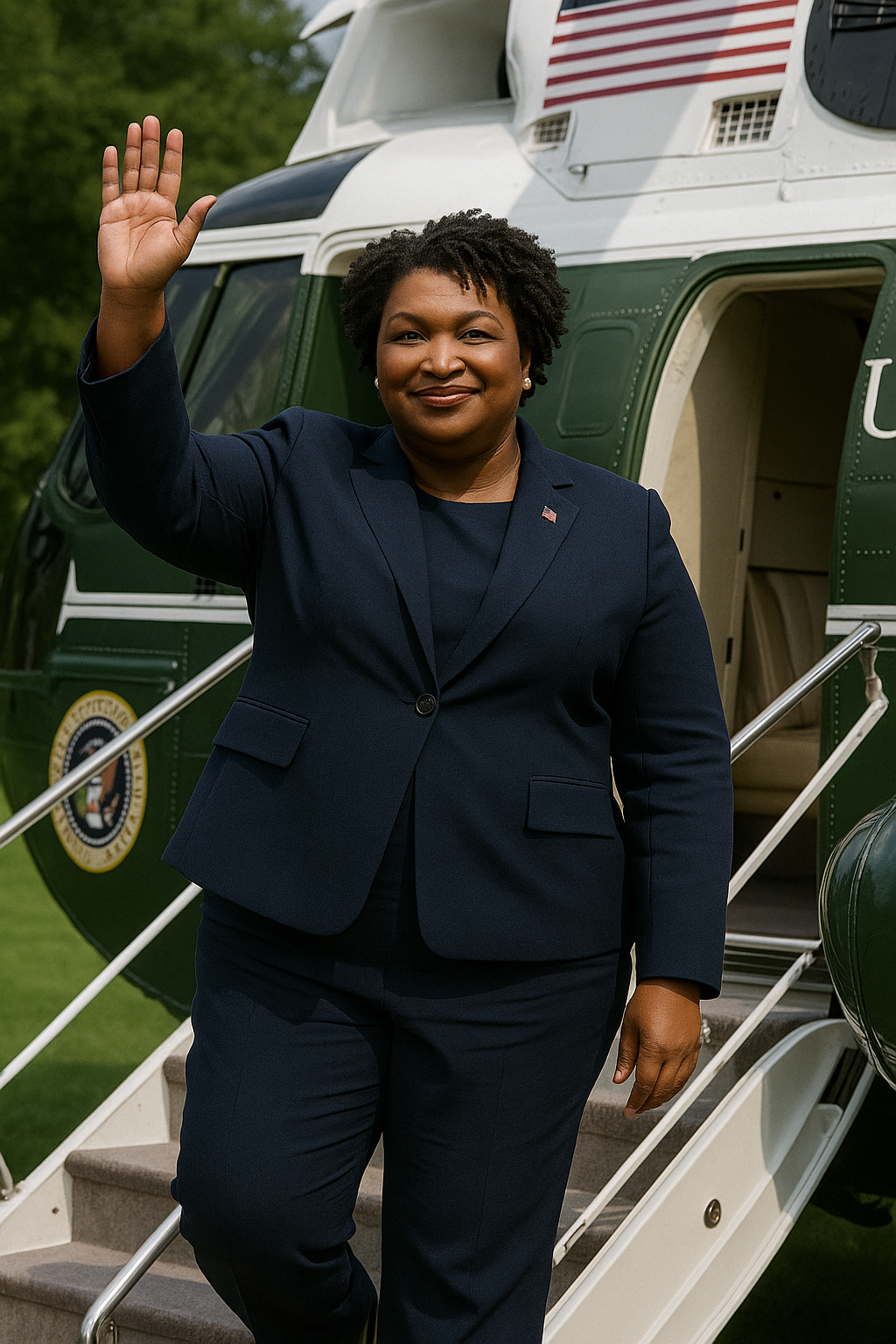
Fundraising for Presidential Campaigns: The Costs and Challenges for Stacey Abrams in 2028
Running for president in the United States is an extremely expensive endeavor. Candidates must raise hundreds of millions of dollars to cover campaign expenses, including advertising, staff salaries, travel, and voter outreach. If Stacey Abrams launches a presidential campaign in 2028, her fundraising ability will be a critical factor in her success.
Abrams has already demonstrated strong fundraising skills in her previous campaigns, but a presidential bid requires fundraising on an entirely new level. Below, we examine the historical costs of presidential campaigns, Abrams’ past fundraising success, and the challenges and opportunities she may face in financing a 2028 run.
How Much Does It Cost to Run for President?
The cost of running a competitive presidential campaign has skyrocketed in recent election cycles. Here’s how much the last few major candidates spent:
📌 2020 Presidential Election:
- Joe Biden: Raised $1.69 billion, spent $1.62 billion
- Donald Trump: Raised $1.96 billion, spent $1.62 billion
📌 2016 Presidential Election:
- Hillary Clinton: Raised $1.4 billion, spent $1.2 billion
- Donald Trump: Raised $957.6 million, spent $877.5 million
📌 2012 Presidential Election:
- Barack Obama: Raised $1.1 billion, spent $985 million
- Mitt Romney: Raised $1.19 billion, spent $992 million
To be a serious contender in 2028, Abrams would likely need to raise at least $1 billion—a staggering figure that only a handful of candidates in history have managed.
Stacey Abrams’ Fundraising Record
Abrams has already proven herself as a fundraising powerhouse, even without the financial infrastructure of a national campaign.
📌 Georgia Gubernatorial Races
- 2018 Race: Raised $27 million, breaking records for a Georgia gubernatorial candidate at the time.
- 2022 Race: Raised $113 million, making it the most expensive governor’s race in Georgia history.
- However, she still lost to Republican Brian Kemp, showing that money alone does not guarantee victory.
📌 Voting Rights and Advocacy Groups
After her 2018 gubernatorial loss, Abrams focused on voter mobilization efforts through Fair Fight Action, an organization that helped register and turn out voters in Georgia.
- Fair Fight raised over $100 million to fight voter suppression and expand Democratic turnout.
These numbers prove Abrams can raise substantial sums of money, but a presidential campaign is a different level of financial challenge.
How Abrams Can Raise Money for a Presidential Campaign
To reach the $1 billion+ needed for a serious 2028 run, Abrams would need to leverage multiple fundraising channels:
1. Small-Dollar Donations (Grassroots Fundraising)
- Abrams has built a strong grassroots donor base, similar to Bernie Sanders and Barack Obama, who relied heavily on small donations from individual supporters.
- Candidates like Sanders (2016, 2020) and Obama (2008, 2012) raised hundreds of millions through small donors, proving that large-scale grassroots fundraising is viable.
- Abrams would likely adopt a digital-first approach, using social media, email lists, and online fundraising platforms like ActBlue to collect donations.
2. High-Dollar Donors and Democratic Party Donors
- Major Democratic donors typically contribute through bundlers, PACs, and corporate networks.
- Past big-money Democratic donors include:
- George Soros (billionaire philanthropist)
- Reid Hoffman (LinkedIn co-founder)
- Hollywood and Silicon Valley executives
- To compete with other top Democratic contenders, Abrams would need to court wealthy donors while maintaining her grassroots appeal.
3. Political Action Committees (PACs) and Super PACs
- Super PACs allow donors to contribute unlimited amounts, though they cannot coordinate directly with campaigns.
- In 2020, pro-Biden Super PACs like Priorities USA and Unite the Country raised hundreds of millions.
- Abrams would likely need Super PAC support to remain competitive in the race.
4. Public Financing (Unlikely)
- The U.S. has a public financing option for presidential candidates, but most major contenders opt out because it limits how much they can raise and spend.
- Barack Obama was the first major candidate to reject public financing in 2008 because he could raise more money on his own.
Challenges Stacey Abrams May Face in Fundraising
While Abrams has strong fundraising potential, she could also face significant hurdles:
1. Competition from Other Democrats
- If Kamala Harris, Pete Buttigieg, Gretchen Whitmer, or Gavin Newsom run, they will compete for the same Democratic donors.
- Candidates with more national political experience might have an edge in attracting large donors.
2. Donor Fatigue
- Many Democratic donors spent record amounts in 2020 and 2022 to defeat Trump and flip the Senate.
- In 2028, some donors may be less willing to give large sums again, especially if they don’t see Abrams as the strongest contender.
3. Questions About Electability
- If major donors doubt Abrams’ ability to win a general election, they may direct funds elsewhere.
- In 2022, despite raising $113 million, she lost by 7.5 percentage points to Brian Kemp—raising concerns about her ability to translate money into votes.
How Much Would Abrams Need to Raise for Key Campaign Phases?
To map out a path to victory, here’s how fundraising typically breaks down:
📌 Primary Campaign (2027–Early 2028)
- Candidates typically spend $200M–$400M in the primary alone.
- Abrams would need at least $250M+ to remain competitive in early states like Iowa, New Hampshire, South Carolina, and Nevada.
📌 General Election (Mid-2028–November 2028)
- The nominee typically spends $800M–$1B+ leading up to the election.
- Advertising costs alone can reach $500M–$600M, especially in battleground states like Georgia, Pennsylvania, Michigan, and Wisconsin.
📌 Total Estimated Cost: $1B–$1.5B
Stacey Abrams has a proven track record as a formidable fundraiser, having raised over $100 million for voter advocacy and over $113 million for her 2022 governor’s race. However, a presidential campaign requires unprecedented financial resources, and she would need to dramatically scale up her fundraising operation to compete at the national level.
Key Strengths:
✔ Strong grassroots donor base
✔ Support from progressive donors and advocacy groups
✔ Experience mobilizing Democratic donors in battleground states
Key Challenges:
❌ Competition from other high-profile Democrats
❌ Concerns about electability after past losses
❌ Potential donor fatigue from recent elections
If Abrams can unite progressive and mainstream Democratic donors, energize grassroots supporters, and leverage her reputation as a voting rights champion, she could successfully finance a 2028 presidential run. However, securing $1 billion+ will be her biggest challenge yet.
 hbcupolitics